
Enterprise Architecture (EA) conveys management best practice for positioning business and technology resources to fulfil strategic goals, make Organizational Performance better, and guide departments to achieve their core missions more successfully.
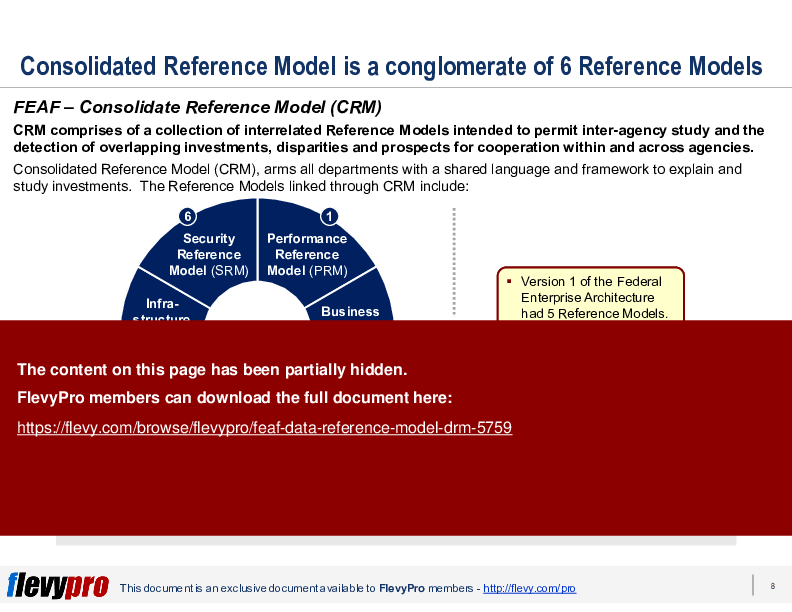
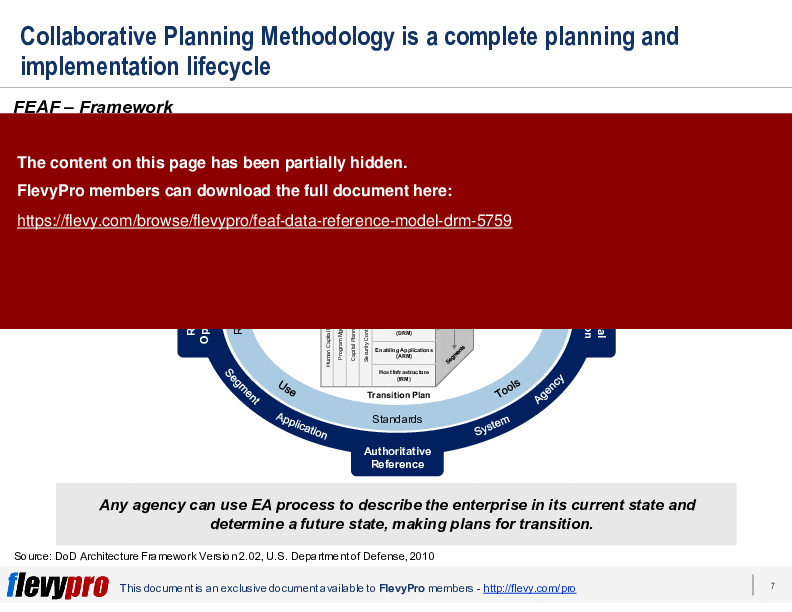
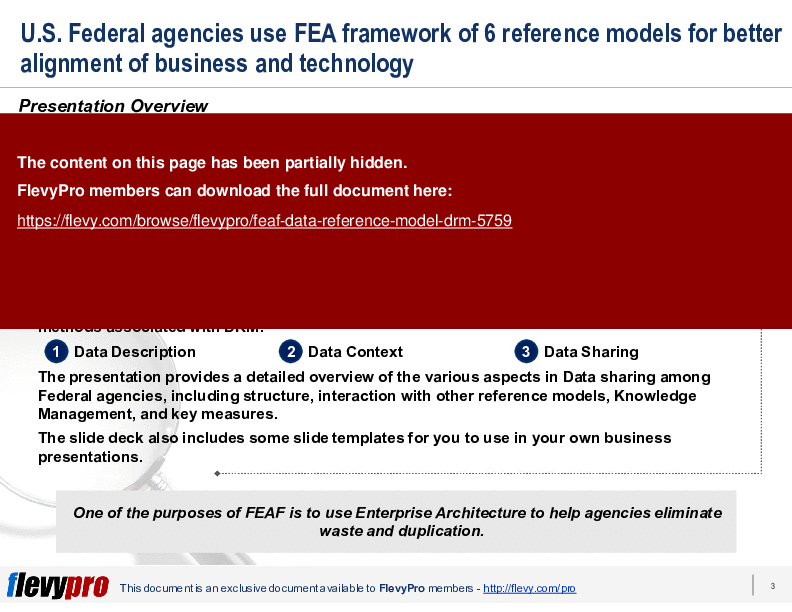
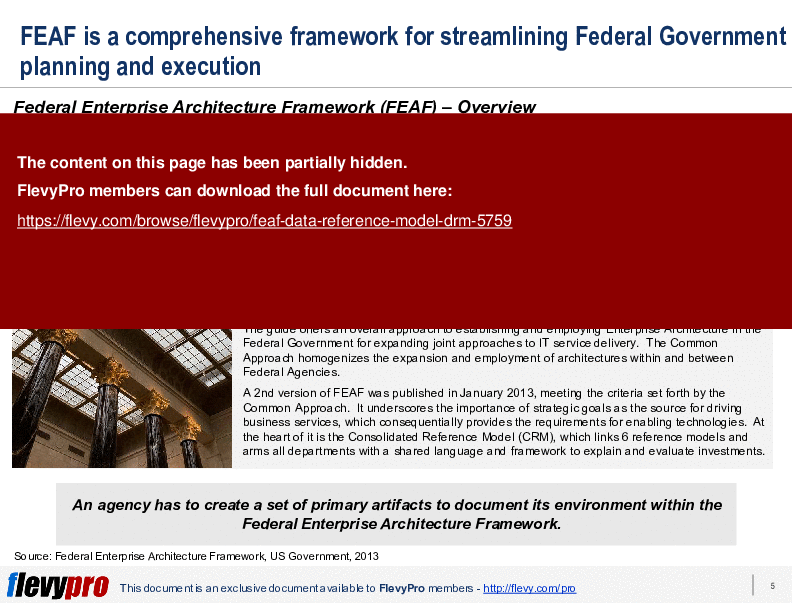
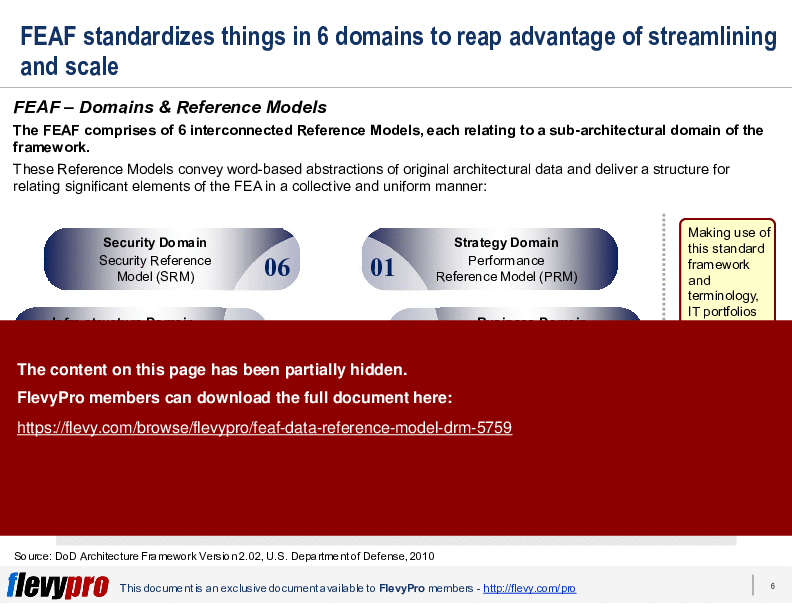
Federal Enterprise Architecture Framework (FEAF) realizes this goal for U.S. Federal agencies and assists systems surpass interagency boundaries. FEAF assists through documentation and information that conveys a summarized outlook of an enterprise at various tiers of scope and detail. One of the purposes of FEAF is to use Enterprise Architecture to help agencies eliminate waste and duplication.
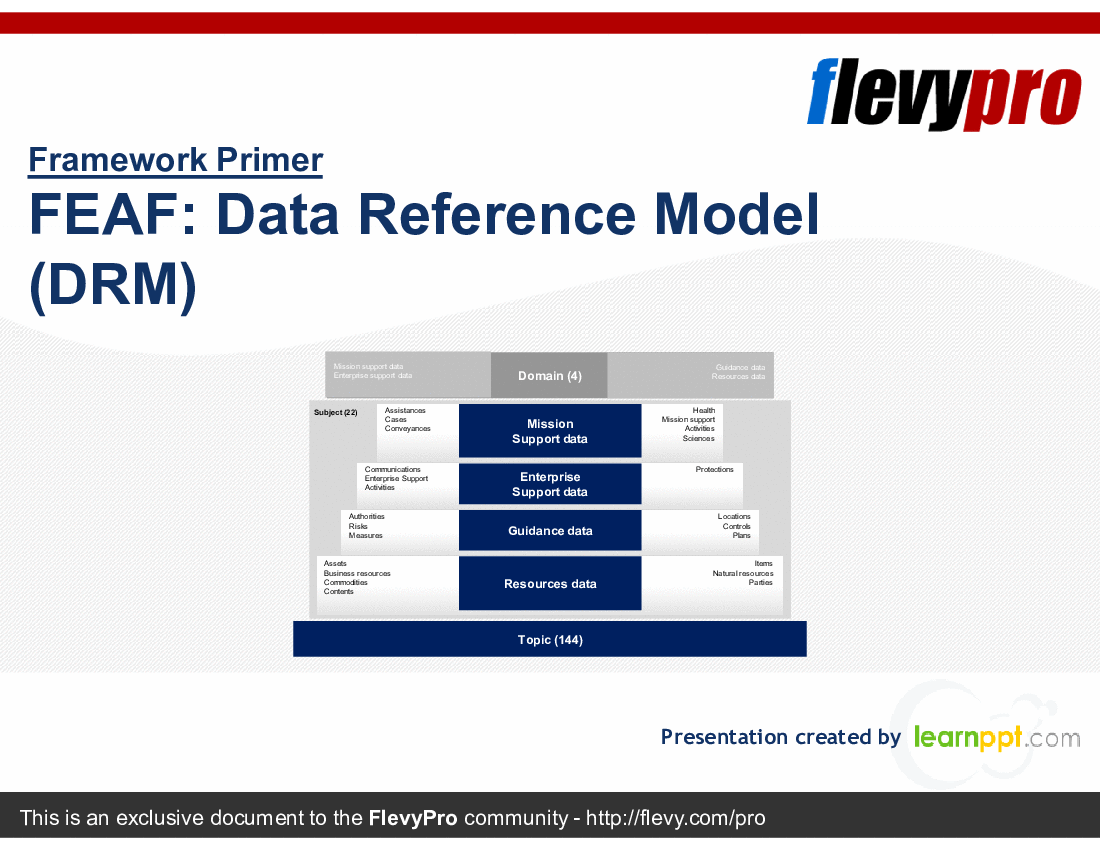
This presentation discusses 1 of the 6 reference models of the Federal Enterprise Architecture Framework—the Data Reference Model (DRM). We also identify and discuss the 3 fundamental methods associated with DRM:
1. Data Description
2. Data Context
3. Data Sharing
The presentation provides a detailed overview of the various aspects in Data sharing among Federal agencies, including structure, interaction with other reference models, Knowledge Management, and key measures.
The slide deck also includes some slide templates for you to use in your own business presentations.
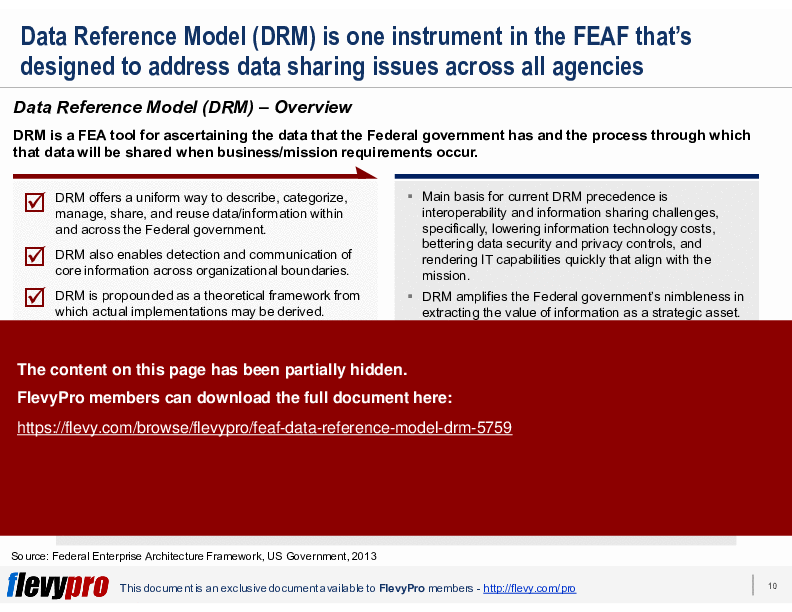
The Data Reference Model (DRM) is a pivotal tool in the Federal Enterprise Architecture Framework (FEAF), designed to streamline data sharing and management across U.S. Federal agencies. By standardizing data description, context, and sharing methods, the DRM ensures that information is consistently categorized, managed, and utilized effectively. This presentation delves into the intricacies of the DRM, providing a comprehensive guide to its implementation and benefits.
The PPT also highlights the DRM's role in enhancing interoperability and reducing redundancy, offering a theoretical framework from which practical applications can be derived. With detailed explanations and visual aids, this slide deck is an invaluable resource for agencies looking to optimize their data management practices and achieve strategic objectives efficiently.
Got a question about this document? Email us at flevypro@flevy.com.
Executive Summary
The FEAF: Data Reference Model (DRM) presentation provides a structured framework for enhancing data sharing and management across U.S. Federal agencies. Developed by seasoned consultants, this presentation outlines the significance of the DRM within the Federal Enterprise Architecture Framework (FEAF). It addresses interoperability challenges, promotes efficient data utilization, and facilitates a standardized approach to data management. By leveraging this model, agencies can streamline their data assets, improve information sharing, and align their data strategies with organizational missions.
Who This Is For and When to Use
• Federal agency executives overseeing data management initiatives
• IT leaders responsible for implementing data sharing protocols
• Data governance teams focused on enhancing data interoperability
• Consultants advising federal agencies on data architecture and management
Best-fit moments to use this deck:
• During the development of data management strategies
• When establishing data sharing agreements between agencies
• In workshops aimed at improving data governance practices
• For training sessions on the implementation of the DRM
Learning Objectives
• Define the Data Reference Model and its role within the FEAF
• Identify key methods for data sharing, description, and context
• Establish best practices for data governance and management
• Assess the impact of data sharing on organizational performance
• Create a roadmap for implementing the DRM across federal agencies
• Measure success factors related to data sharing initiatives
Table of Contents
• Overview (page 3)
• Federal Enterprise Architecture Framework (FEAF) (page 5)
• Data Reference Model (DRM) (page 10)
• DRM Methods (page 19)
• Measurement Success Factors (MSF) (page 24)
• Templates (page 28)
Primary Topics Covered
• Overview of FEAF - Introduces the Federal Enterprise Architecture Framework and its purpose in aligning business and technology across federal agencies.
• Data Reference Model (DRM) - Describes the DRM as a tool for managing and sharing data across federal agencies, emphasizing its adaptability and standardization.
• DRM Methods - Outlines the 3 fundamental methods: Data Sharing, Data Description, and Data Context, essential for effective data management.
• Measurement Success Factors - Discusses key performance measures for assessing the effectiveness of data sharing initiatives within the DRM framework.
• Templates - Provides templates to assist in the implementation of the DRM and related processes.
Deliverables, Templates, and Tools
• Data management strategy template for federal agencies
• Data sharing agreement framework
• Data governance checklist for agency compliance
• Performance measurement plan for assessing DRM effectiveness
• Data asset catalog template for inventory management
• Metadata standards guide for data description
Slide Highlights
• Overview slide outlining the purpose and structure of the FEAF
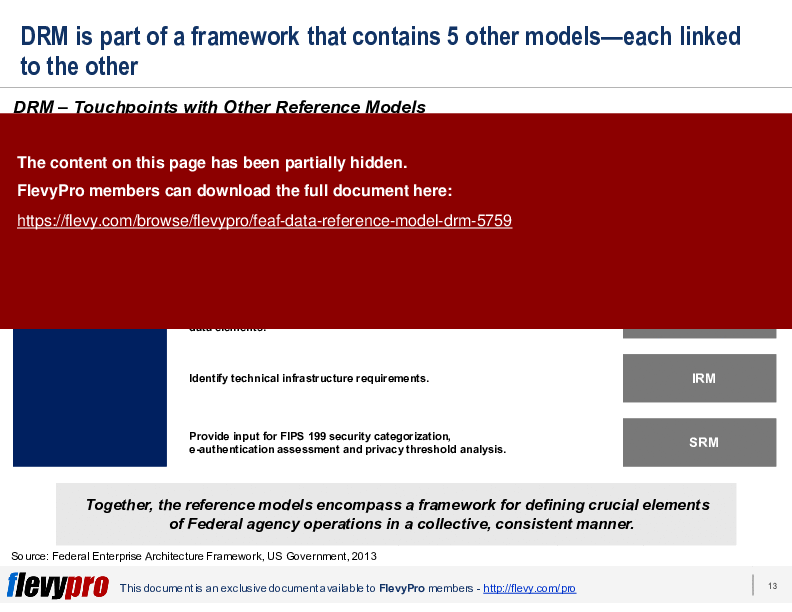
• Diagram illustrating the relationship between the DRM and other reference models
• Detailed breakdown of the 3 methods associated with the DRM
• Key performance measures for evaluating data sharing success
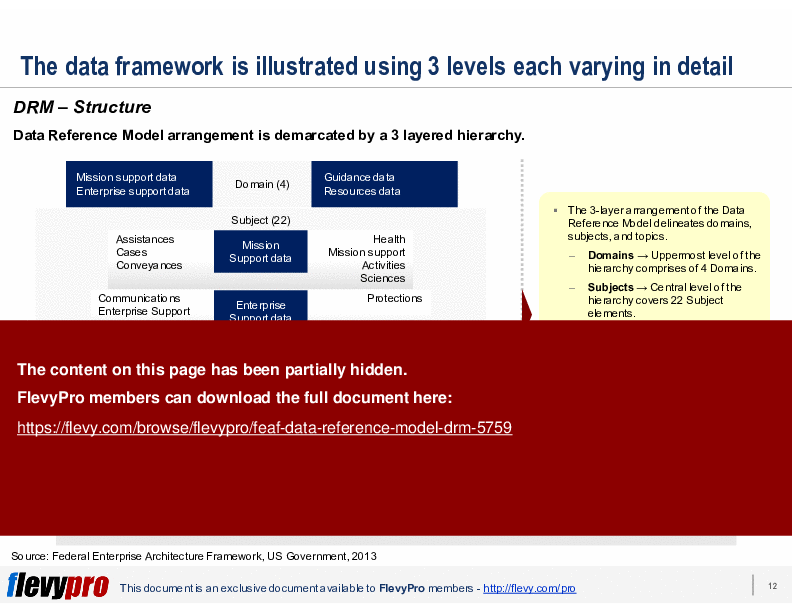
• Visual representation of the DRM meta-model and its components
Potential Workshop Agenda
Introduction to the DRM (30 minutes)
• Overview of the FEAF and the importance of the DRM
• Discussion on the role of data sharing in federal operations
Data Sharing Best Practices (60 minutes)
• Review of successful data sharing initiatives
• Group activity to develop a data sharing agreement template
Implementing the DRM (90 minutes)
• Step-by-step guide to integrating the DRM into agency operations
• Discussion on measurement success factors and performance tracking
Customization Guidance
• Tailor the data management strategy template to reflect agency-specific goals and objectives
• Adjust the data sharing agreement framework to align with inter-agency requirements
• Incorporate agency-specific metrics into the performance measurement plan
Secondary Topics Covered
• Interoperability challenges in federal data management
• Importance of data governance in enhancing data quality
• Strategies for improving data security and privacy controls
• Role of technology in facilitating data sharing
Topic FAQ
Document FAQ
These are questions addressed within this presentation.
What is the purpose of the Data Reference Model?
The Data Reference Model serves as a framework for federal agencies to manage and share data effectively, ensuring interoperability and standardization across the government.
How does the DRM enhance data sharing?
The DRM provides a uniform approach to categorize, manage, and share data, facilitating communication and collaboration among federal agencies.
What are the key methods associated with the DRM?
The 3 fundamental methods are Data Sharing, Data Description, and Data Context, each contributing to effective data management practices.
How can agencies measure the success of their data sharing initiatives?
Success can be measured through established performance metrics, including the discoverability, quality, and trustworthiness of shared data.
What templates are included in the presentation?
Templates for data management strategies, data sharing agreements, and performance measurement plans are included to assist agencies in implementation.
Can the DRM be customized for specific agency needs?
Yes, the DRM framework is adaptable and can be tailored to fit the unique requirements and objectives of individual federal agencies.
What challenges might agencies face when implementing the DRM?
Agencies may encounter interoperability issues, resistance to change, and the need for robust data governance structures.
How does the DRM support knowledge management?
The DRM facilitates the organization and sharing of data, which is essential for effective knowledge management and decision-making processes.
Glossary
• Data Reference Model (DRM) - A framework for managing and sharing data across federal agencies.
• Federal Enterprise Architecture Framework (FEAF) - A comprehensive framework for aligning business and technology in federal agencies.
• Data Sharing - The process of exchanging data between agencies to enhance collaboration.
• Data Description - The method of categorizing and defining data for effective management.
• Data Context - Information that provides meaning and understanding to data.
• Measurement Success Factors (MSF) - Metrics used to evaluate the effectiveness of data sharing initiatives.
• Metadata - Data that provides information about other data, facilitating its management and sharing.
• Data Governance - The framework for managing data availability, usability, integrity, and security.
• Interoperability - The ability of different systems to work together and share data seamlessly.
• Data Asset Catalog - A comprehensive inventory of data assets within an organization.
• Performance Metrics - Standards used to measure the success of data management initiatives.
• Data Quality - The condition of data based on factors such as accuracy, completeness, and reliability.
• Data Security - Measures taken to protect data from unauthorized access and breaches.
• Knowledge Management - The process of capturing, distributing, and effectively using knowledge within an organization.
• Data Exchange - The transfer of data between information providers and consumers.
• Data Stewardship - The responsibility for managing and overseeing data assets within an organization.
• Data Standards - Established guidelines for data management and sharing practices.
• Data Architecture - The structure and organization of data within an organization.
• Communities of Interest (COIs) - Groups of stakeholders who share a common interest in a particular area of data management.
• Information Sharing Environment (ISE) - A framework for facilitating the sharing of information across agencies.
• Data Catalogs - Tools used to organize and manage data assets for easy access and retrieval.
Source: Best Practices in Data Collection, Enterprise Architecture, Business Architecture, Metadata Management PowerPoint Slides: FEAF: Data Reference Model (DRM) PowerPoint (PPTX) Presentation Slide Deck, LearnPPT Consulting
Did you need more documents?
Consider a FlevyPro subscription from $39/month. View plans here.
For $10.00 more, you can download this document plus 2 more FlevyPro documents. That's just $13 each.
This document is available as part of the following discounted bundle(s):
Save %!
Federal Enterprise Architecture Framework (FEAF) - Full Series
This bundle contains 6 total documents. See all the documents to the right.

|
Download our FREE Digital Transformation Templates
Download our free compilation of 50+ Digital Transformation slides and templates. DX concepts covered include Digital Leadership, Digital Maturity, Digital Value Chain, Customer Experience, Customer Journey, RPA, etc. |